Why Direct Sunlight Isn’t Always Best for Photos
If you’ve ever taken pictures in bright midday sun and wondered why everyone’s faces look washed out or shadowed, you’re not alone. While sunshine feels great, it’s not always the most flattering light for photography. As a Massachusetts photographer, I’ve learned that lighting can completely transform the look and feel of a session — and sometimes, the best light comes from clouds instead of the sun.
The Problem with Harsh Sunlight
Direct sunlight creates strong, harsh lighting that can blow out highlights (making parts of your face look too bright) while casting dark, unflattering shadows under your nose, chin, or eyes. These hard lines make it difficult to achieve even skin tones and soft, natural contrast. In the middle of the day — especially between 10 a.m. and 2 p.m. — the sun sits high in the sky, causing sharp angles that exaggerate every contour.
That’s why many Massachusetts photography sessions are intentionally scheduled for early morning, late afternoon, or on days when the sky is more forgiving.
Golden Hour Magic
Every photographer loves golden hour — that dreamy window about an hour before sunset (or just after sunrise). The light turns warm and golden, creating soft, glowing tones that flatter skin and make colors pop.
When the sun sits lower on the horizon, it wraps around you rather than beaming down from above. Shooting with the sun behind the couple can create a beautiful hazy effect, complete with a natural lens flare and warm backlight that feels cinematic and romantic.
Why Cloudy Days Are Secretly the Best
That said, my absolute favorite lighting for portraits is a cloudy day. Clouds act like a giant soft box — the same kind of diffuser photographers use in the studio to spread out flash lighting evenly. (Learn more about what a soft box is and how it works.)
This type of light softens shadows, reduces squinting, and brings out natural skin tones. It’s consistent, too — meaning you don’t have to chase patches of shade or constantly adjust for changing sun angles.
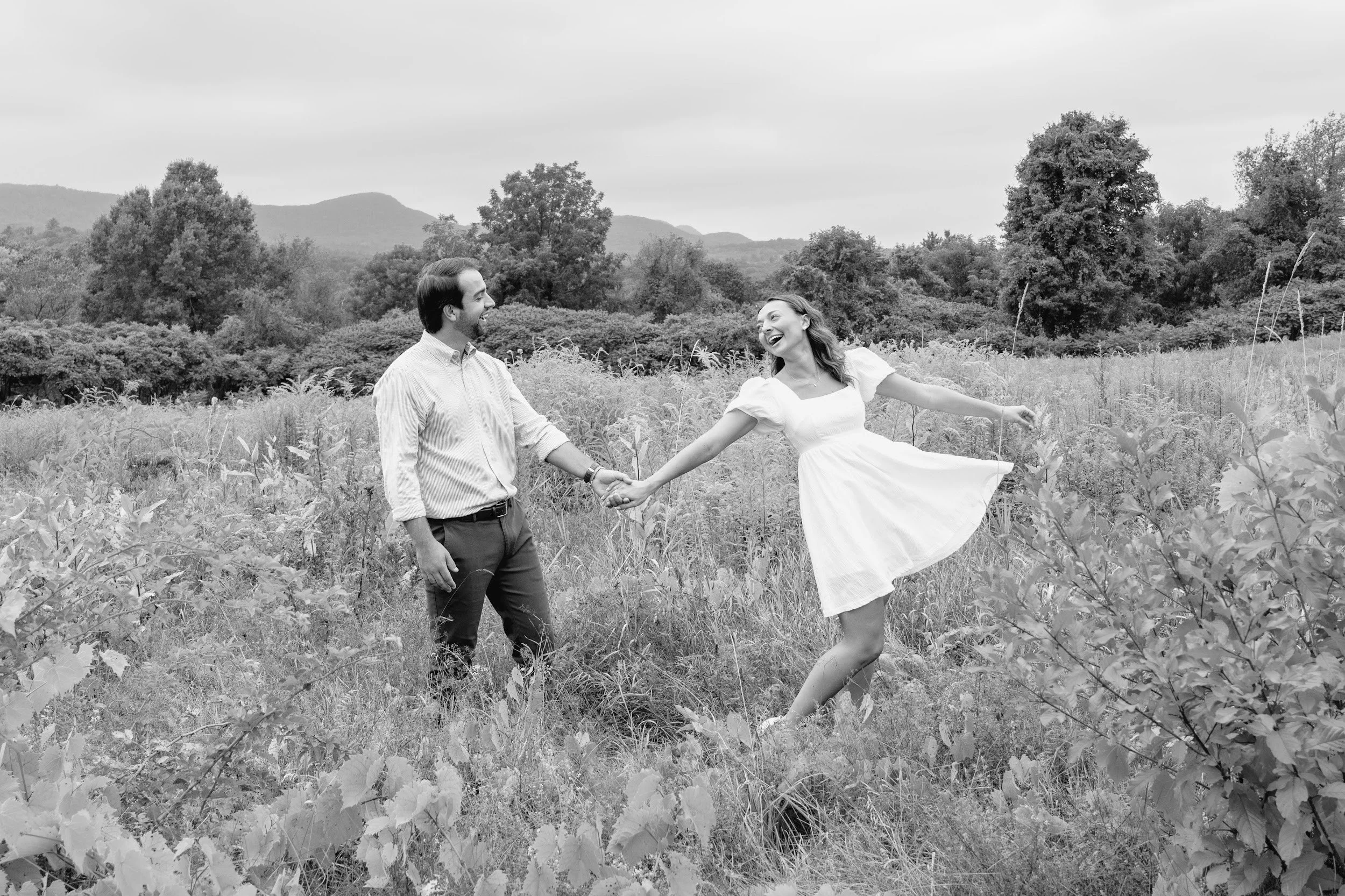
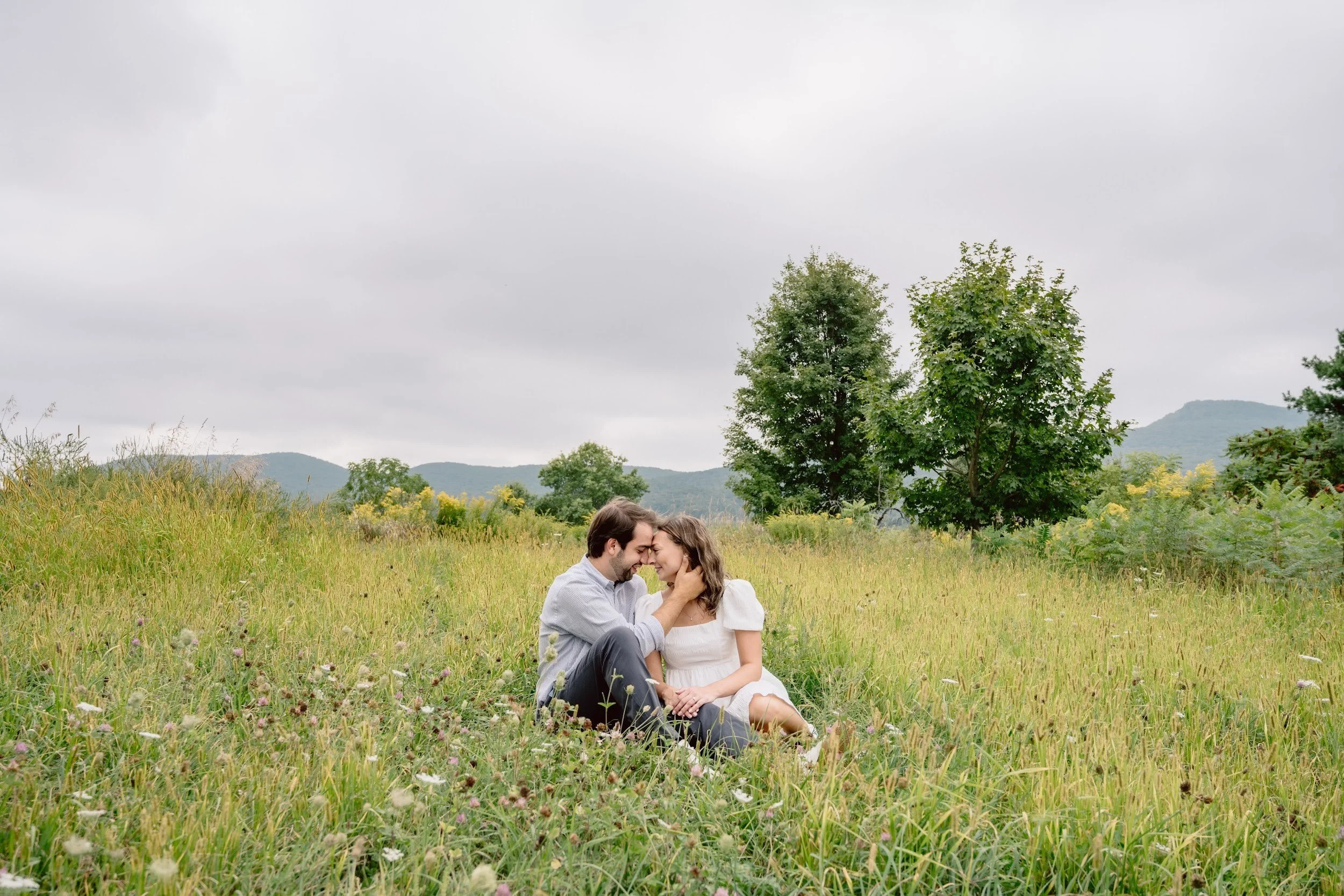
One of my favorite examples was this past summer during an engagement shoot with Ally & Josh. We originally planned to meet on a Saturday evening around 5:30 p.m. for golden hour, but when the weather forecast called for rain, we moved the session to mid-morning instead. By 10 a.m., the clouds rolled in — and the diffused light created the most gorgeous, even tones. Every photo looked soft, balanced, and timeless
The Takeaway
No matter the weather, it’s important to hire a Massachusetts photographer who knows how to work in any lighting situation — whether that’s full sun, overcast skies, or the soft glow of golden hour. Experience matters when it comes to finding flattering angles and using light to tell your story.
And yes… I’ll admit it — I might be one of the few photographers who actually gets excited about a cloudy day!
